Approval routes · Class 1 & Class 10
Building approvals for NSW
Most home projects in NSW follow one of three routes. Some work is exempt. Some qualifies for a CDC. For everything else, council decides a DA, then a CC is needed before building. Your lot and your design decide which one applies.
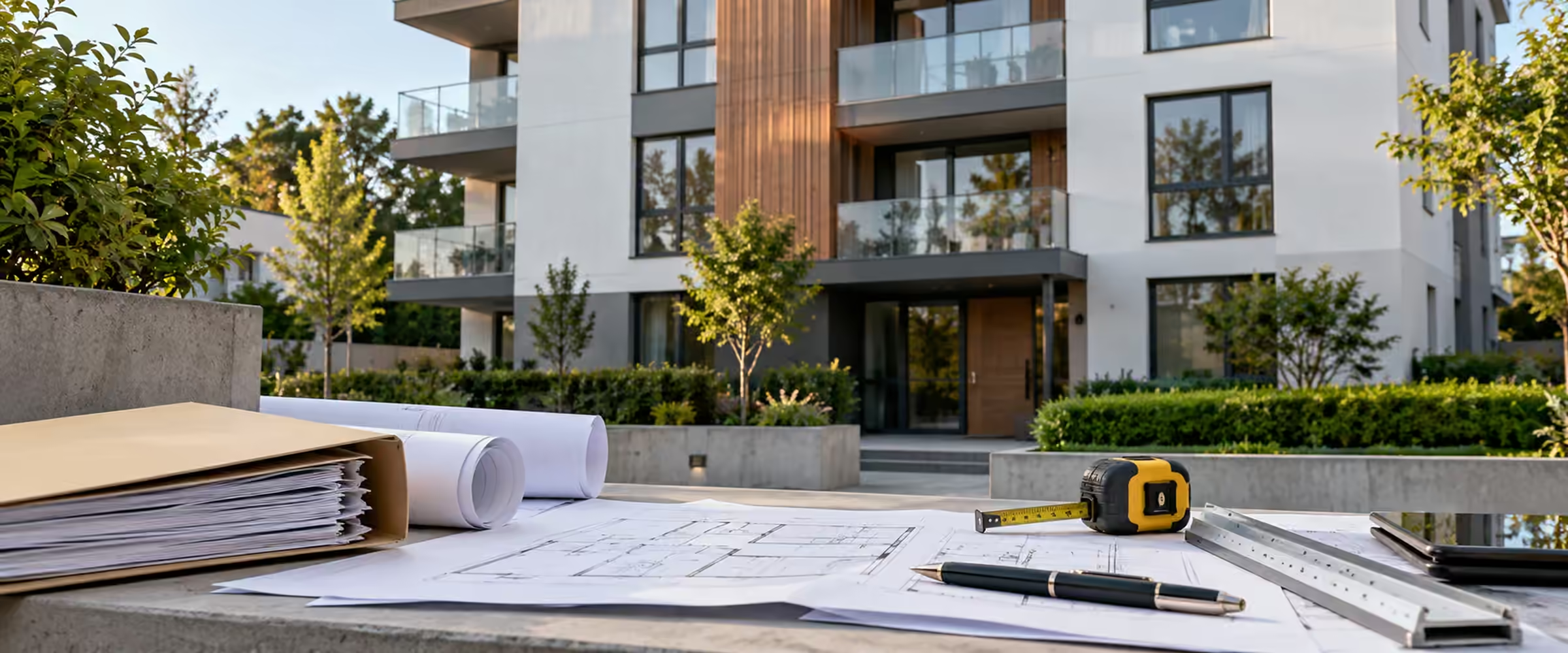
At a glance
Three ways to get approval
NSW sorts building work by how much checking it needs. Small, low impact work can be exempt. Work that ticks every box in a state code can use a complying development certificate (CDC). For anything else, council weighs the merits of a DA. Once consent is granted, a CC must be issued before building starts.
Which route applies comes down to your lot and your design. Zoning, lot size, heritage, bush fire and flood mapping on your land settle the answer, so check your lot before you lock in a design.
Book a plan assessmentApproval routes
Three: exempt, CDC, or DA and then CC.
Who can issue a CDC
Council or a registered certifier.
CDC timing in NSW guidance
Possible in as little as 20 days.
Once approved
Principal certifier, inspections, then an OC.
After approval
After approval, before and during the build
What has to happen between the approval and moving in.
01
Appoint a principal certifier
Under a CDC, or under a DA and CC, a principal certifier is needed before any work begins. The builder must not pick the certifier or influence who is chosen.
02
Give notice of commencement
Council must get at least 2 days' notice before work begins. Under a DA, the CC must also be issued first. A CC issued after work starts is invalid.
03
Sort insurance or an owner-builder permit
A licensed contractor doing work over $20,000 must hold home building compensation cover before any deposit is accepted or work begins. Owner-builders need a permit for approved work over $10,000.
04
Book critical stage inspections
The principal certifier inspects key stages, from footings and framing to waterproofing and stormwater. Whoever is doing the work must give at least 48 hours' notice of each inspection.
05
Get the occupation certificate
After the final inspection, the principal certifier can issue the OC. It is needed before anyone occupies or uses the building. A new pool cannot be used without it.
Prepare your application
What to have ready
Most applications start with the same core documents. The full list depends on the route and the project.
- Planning certificateA section 10.7 certificate from council, showing which codes can apply to your land.
- SurveyBoundary lines, ground levels and any structures already on the lot.
- Plans and elevationsPlans, elevations and sections, with finished levels and the stormwater method.
- Owner's consentSigned consent from the landowner when someone else applies.
- BASIX certificateNeeded for every new home, and for some alterations and larger pools.
- Cost estimate and levyThe estimated cost of the work. Once it reaches $250,000, the long service levy applies at 0.25%, and the CDC or CC cannot be released until it is paid.
Project-specific pricing
Quoted for your project.
Fees depend on the pathway, the design and the inspections required.
- Approval pathway
- Size and design
- Number of inspections
- Lot constraints
The three routes
Three ways to get approval
Each route suits a different kind of project. Here is what each one involves, when it fits, who approves it and how long it can take.
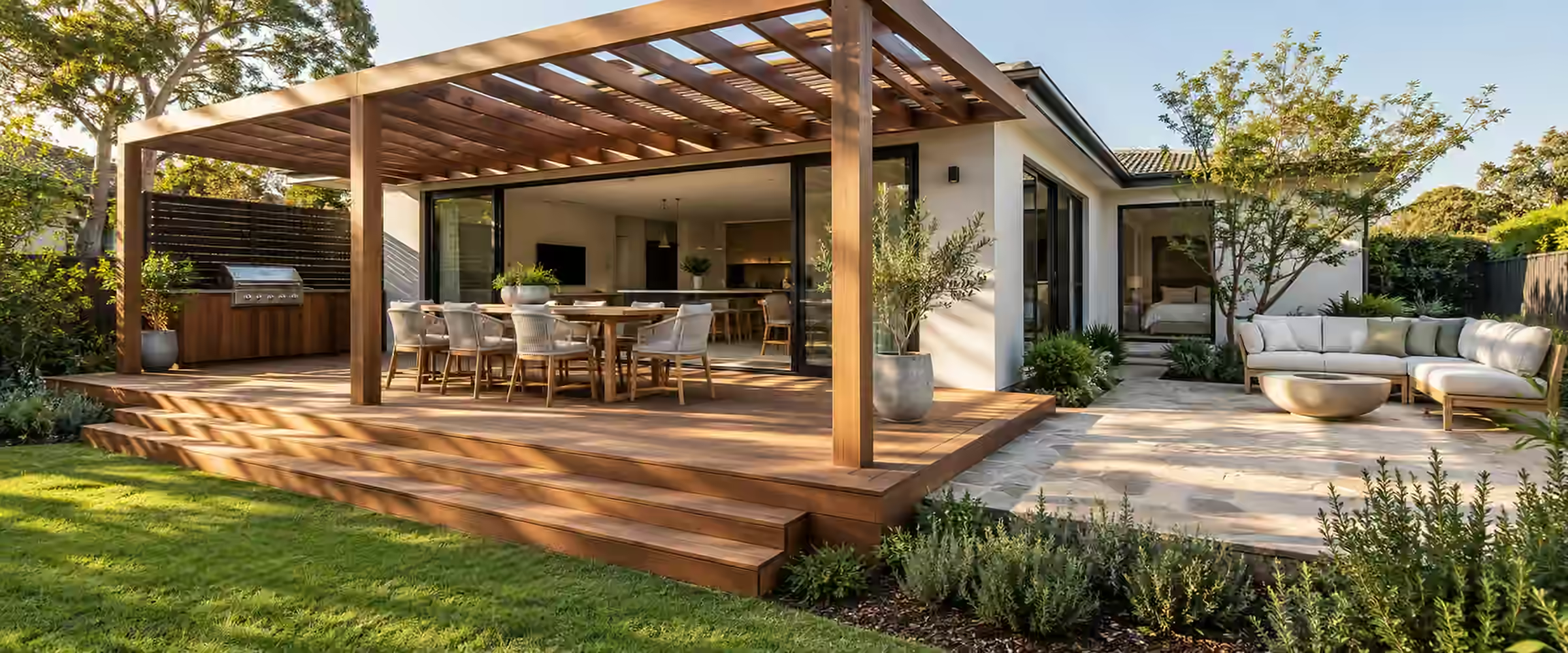 Exempt developmentCheck if your work is exempt
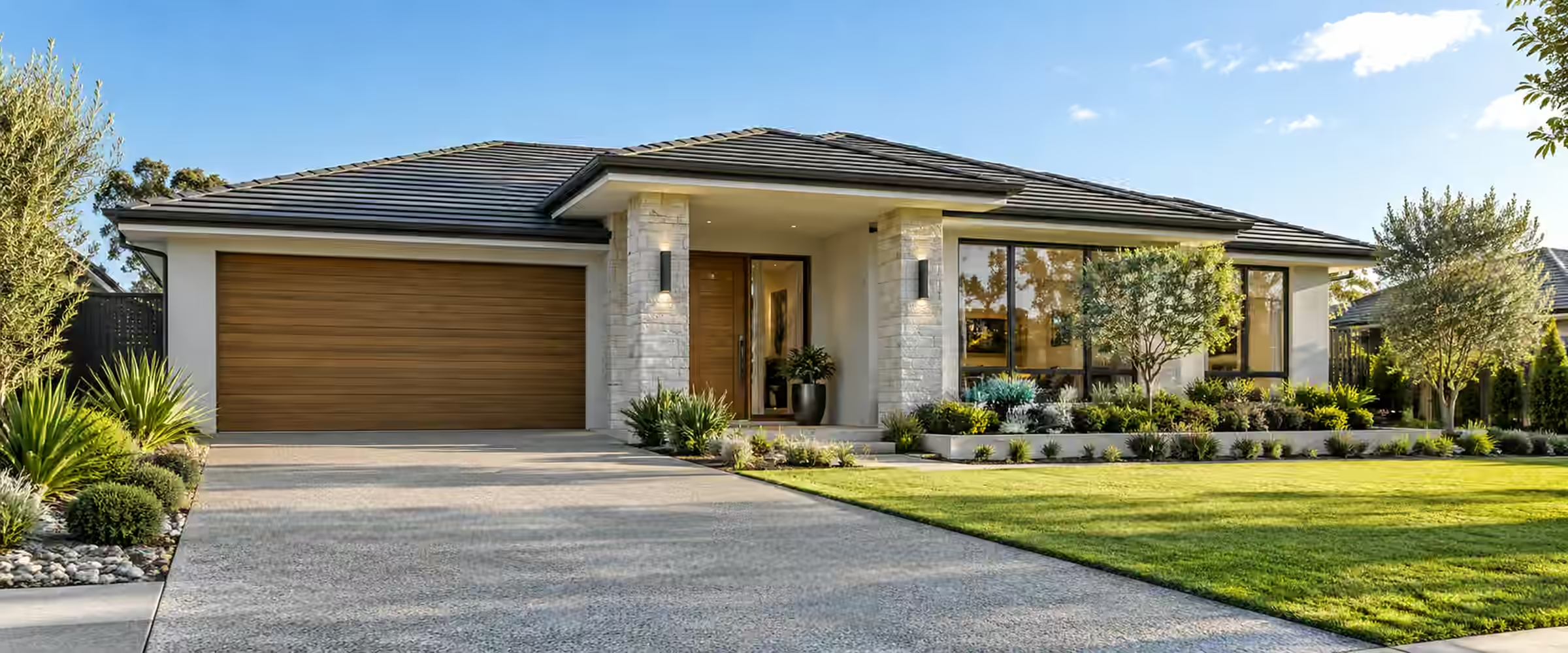 Complying development certificate (CDC)Read about CDCs
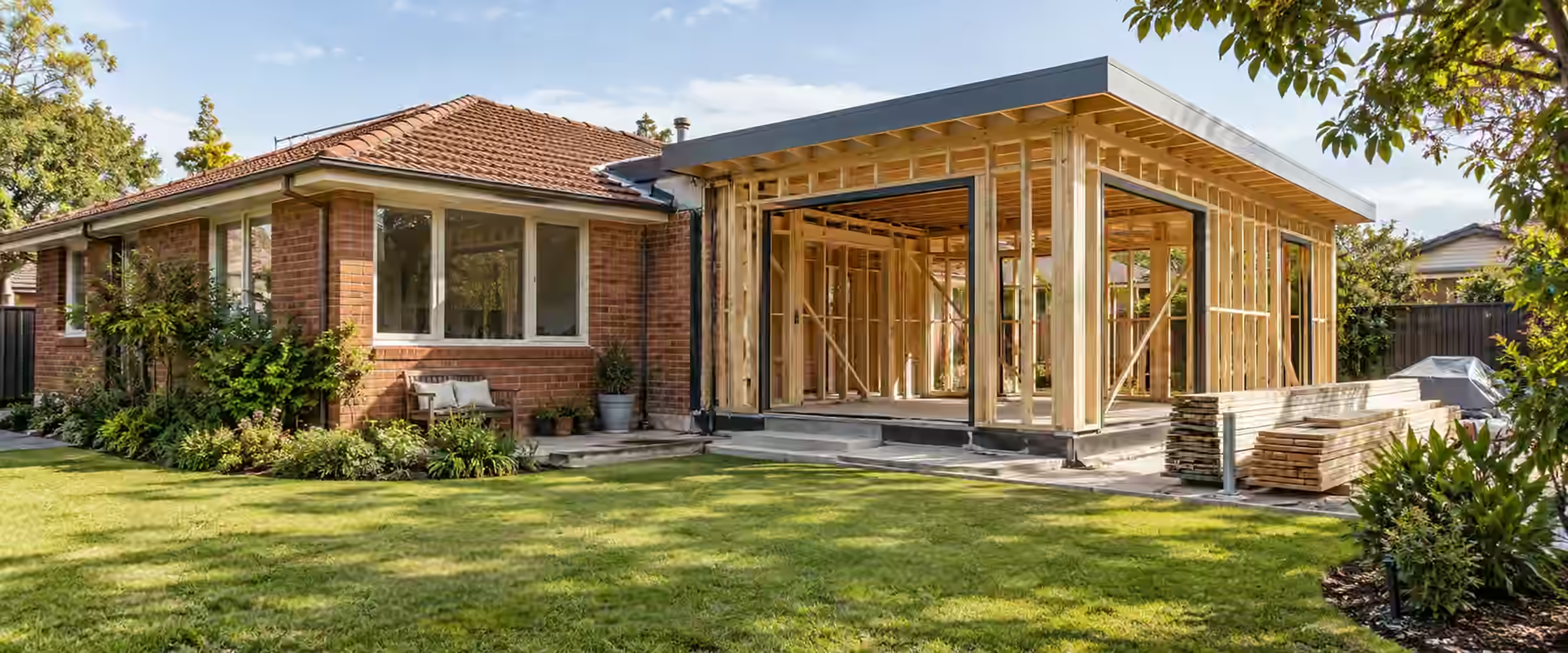 Development application (DA) then construction certificate (CC)Read about construction certificates
Exempt work has to satisfy each standard for that structure, comply with the building code and have the landowner's approval. Falling short on a single limit means the project moves to one of the other two routes.
Your lot
What your lot decides
Each of these can change which route is open to you. Check them early, before money goes into detailed drawings.
The zone
Zoning
Each code only applies in set zones. The Housing Code works in R1 to R4 and RU5. Rural land falls under its own code. Your planning certificate shows the zone, so check it first.
The listing
Heritage
Heritage items, heritage conservation areas and sites with an interim heritage order usually rule out a CDC, with some listed exceptions. Exempt work is also barred on State Heritage Register items.
The fire risk
Bush fire prone land
A CDC is off the table at the two highest bush fire ratings, which are BAL-40 and the flame zone, BAL-FZ. Before lodging, council or a qualified consultant usually issues a BAL certificate to confirm the rating.
The water
Flood control lot
Some complying work can go ahead on a flood control lot, but extra flood requirements under the code apply. Certain external alterations are not allowed as complying development there.
The land
Lot size and width
Codes set minimum lot sizes. A Housing Code home needs 200 m² or more of land, and the lot must have at least 6 m of width at its building line. Complying granny flats generally need 450 m².
The design
Design meets code standards
A CDC is a check against fixed numbers, not a judgement call. Height, setbacks and every other limit must be met. Small misses mean redesign or a DA.
Common projects
Which route suits common projects?
This table shows how typical Class 1 and 10 projects often play out. It is a starting point only. Zoning, lot size, heritage, bush fire and flood mapping on your land settle the answer, so check your lot before you lock in a design.
Sources: Exempt development (NSW Planning Portal); Complying development (NSW Planning); Housing Code (NSW Planning Portal); Building productivity reforms (Building Commission NSW). General information only; requirements depend on your lot, design and approval.
New house
Exempt: no. CDC: yes, for one or two storeys under the Housing Code. DA: usually needed when lot exclusions apply or a design standard is missed.
Knockdown rebuild
Exempt: no. CDC: often. Each part is checked separately: demolition under one code, the new house under another. DA: usually needed when heritage, lot exclusions or a non-compliant design apply.
Alterations and additions
Exempt: some minor work only. CDC: yes, when the work stays within the code limits. DA: usually needed when it adds a dwelling or changes the building class.
Second storey addition
Exempt: no. CDC: can be, if the result meets the two storey standards. DA: usually needed when height, setbacks or heritage controls rule out a CDC.
Granny flat
Exempt: no. CDC: yes, usually on lots of 450 m² and up. DA: usually needed when the lot is smaller or the design is outside the standards.
Dual occupancy
Exempt: no. CDC: possible under the LRHD Code. DA: usually needed when the lot is under the minimum size, heritage applies or a standard is missed.
Swimming pool or spa
Exempt: no. CDC: yes, if located behind the building line. DA: usually needed when the waterline would sit closer than 1 m to a rear or side boundary.
Shed or outbuilding
Exempt: often, if small and within the limits. CDC: yes, for larger sheds that meet the code. DA: usually needed when the size or siting goes past the code.
Carport or garage
Exempt: small carports only. Garages never. CDC: yes, for garages and larger carports. DA: usually needed when the design or site falls outside the code.
Decks, pergolas, retaining walls
Exempt: often, if within the size and height limits. CDC: yes, for bigger decks and taller walls. DA: usually needed when the structure falls outside both sets of rules.
Changes on the way
The Building (Approvals and Practitioners) Act 2026 passed Parliament in August 2026. It will move building approvals out of the planning Act into a new law. It only starts once regulations are made, and no date is set. Until then, today's system still applies.
Dual occupancies after the housing reforms
From 1 July 2024, the state allowed dual occupancies and semi-detached homes on all land zoned R2 for low density housing, statewide. This was the first stage of the state's Low and Mid-Rise Housing Policy.
Stage two followed on 28 February 2025. It promotes dual occupancies, terraces, townhouses and low-rise apartments on residentially zoned land close to 171 selected town centres and rail or light rail stops, measured as up to 800 metres on foot. These areas sit in Greater Sydney, Newcastle and the Lower Hunter, Illawarra-Shoalhaven and the Central Coast.
Some land is left out, including land with high bush fire or flood risk, land containing a heritage item, and land near dangerous goods pipelines or under high aircraft noise. Being permitted does not decide the route. A project may still qualify for a complying development certificate (CDC), or need a development application (DA), based on the lot and its plans.
Building in a mine subsidence district
Parts of NSW are declared mine subsidence districts. Building or subdividing in one requires Subsidence Advisory NSW to approve the work before it starts, although some minor works, such as small carports, decks and fences, are exempt. The NSW Planning Portal shows whether a property falls within a district and which guideline applies to it.
The assigned guideline sets the approval path. Councils and certifiers may approve work without a referral on properties assigned Guidelines 2, 3 and 3A, plus 6 and 8. On properties assigned Guideline 1, 1A, 4, 5 or 7, the work must be approved by Subsidence Advisory itself. A DA in a district is treated as integrated development, so council refers it on.
Subsidence Advisory approves applications that meet the guideline within 7 calendar days of receipt, and makes merit decisions within 40 calendar days unless more information is needed.
Bush fire prone land and the DA route
Complying development on bush fire prone land is limited to sites with a bushfire attack level (BAL) of BAL-LOW, BAL-12.5, BAL-19 or BAL-29. Sites rated above that need a DA instead, and council cannot approve development on bush fire prone land unless it complies with the bush fire planning guidelines published by the Rural Fire Service.
For a single new house, the applicant can show compliance using the single dwelling kit published by the Rural Fire Service (RFS), or a certificate from a qualified consultant. The BAL can only be endorsed by council or by a bush fire consultant holding accreditation. A DA for one dwelling is not integrated development, whereas a residential subdivision requires a safety authority issued by the RFS Commissioner.
State agency referrals from July 2026
Some DAs need input from a state agency, for example where bush fire or mine subsidence risk triggers a referral. Any DA lodged from 1 July 2026 onward has these referrals handled by the Development Coordination Authority, a single point of contact within the state planning department.
Applicants do not usually deal with it directly. Council makes the referral and remains the contact for updates. The authority and other bodies generally have 28 calendar days to respond to a local referral, with the clock paused if more information is requested. DAs lodged before 1 July 2026 stay under the earlier arrangements.
Can work be approved after it is built?
Neither a DA nor a construction certificate (CC) can approve building work that was carried out without one. A CC only covers future work, and council cannot approve completed works through a DA. A DA can sometimes deal with a use that started without approval, but not the structure itself.
For a structure already built, the usual option is a building information certificate from council. It limits certain council orders, yet it approves nothing, and council can still issue a fine or start legal action over the unauthorised work.
More sources: NSW Planning: Low and Mid-Rise Housing Policy; Subsidence Advisory NSW: Development approval process; NSW RFS: Building on bush fire prone land, what you need to know; NSW Planning: Development Coordination Authority FAQs; Hawkesbury City Council: Unauthorised development fact sheet; NSW Planning Portal: Post-consent certificates. General information only; requirements depend on your lot, design and approval.
Your questions, answered
Building approvals, explained.
Common questions from owners working out which approval they need.
Ask us about your projectIs approval needed for a small shed or deck?
Often not, as long as the structure meets every exempt development standard in the state code. Decks, garden sheds and carports are common exempt works, but only when each limit on size, height, setback and location is met and the structure is sound and built to meet the building code. Exempt work is ruled out on land with a State Heritage Register item, land covered by an interim heritage order, and wilderness or critical habitat. Miss a single standard and approval is needed before building, either as complying development or through council.
How does a CDC differ from a DA?
A CDC is a fixed-standard approval that covers planning and building in one certificate, and it can come from council or a registered certifier. Council decides a DA on its merits against local planning controls, and a CC must follow before construction. The CDC route only works when the site and the plans meet every standard. A DA suits designs that depart from a code, land excluded from complying development, and bush fire sites rated BAL-FZ or BAL-40. Both routes end with inspections and an occupation certificate.
How can I tell which approval route my lot allows?
Begin by ordering a section 10.7 planning certificate from council. It shows the zoning, includes information on complying development for the land, and lists hazards such as bush fire and flooding. Check the NSW Planning Portal as well for mine subsidence districts. Next, test the design against whichever code covers that zone, for example the Housing Code for a detached house. If the land and the drawings both pass, the CDC route may be open; if not, expect a DA. Use a recent certificate, because controls change.
Will a new pool need an approval?
In most cases yes, and many private pools can be approved as complying development under the Housing Code. To qualify, the pool must serve a dwelling house, sit behind its building line and keep a gap of 1 metre or more between the waterline and each side or rear boundary. On a corner lot it must also sit behind the secondary road setback. A pool holding at least 40,000 litres needs a BASIX certificate. The principal certifier inspects the work, and an occupation certificate is needed before the pool is used.
Can building start as soon as my approval is issued?
Not immediately, because several things must be in place first. The owner appoints a principal certifier, and when that is not council, council must hear about it at least 2 days ahead of the start. A DA project also needs its CC. For any job with a cost of $250,000 or above, the long service levy has to be paid before a CC or CDC is released. A licensed contractor on work over $20,000 needs home building compensation cover before taking any deposit, and an owner-builder needs a permit for work over $10,000.
Which projects can CertifiBuild certify?
CertifiBuild certifies Class 1 buildings and Class 10 structures only. That includes houses, dual occupancies and terraces where no dwelling sits above another, granny flats and small Class 1b boarding houses, as well as garages, carports, sheds, swimming pools, retaining walls and outdoor decks. For this work we can issue CDCs and CCs, act as principal certifier and carry out critical stage inspections. A DA is always decided by council. Other building classes, such as manor houses or apartments, call for a certifier whose registration covers that class.
Next steps
Related services.
Guidance: State Environmental Planning Policy (Exempt and Complying Development Codes) 2008, the Environmental Planning and Assessment Act 1979 and the National Construction Code. The route that applies depends on your lot and design.
Guides
Building approval guides
Exempt development: small building jobs that need no approval
Reading your planning certificate before you design
CDC or DA: picking the approval your home project needs
Where we work
Building approvals across NSW
We work in 39 council areas, from Newcastle and the Central Coast through Greater Sydney and the Blue Mountains to Lithgow, the Southern Highlands and the Illawarra. Local rules shape every approval, so start with your council or suburb.
Council areas
- Camden Council
- Fairfield City Council
- Georges River Council
- Hawkesbury City Council
- Ku-ring-gai Council
- Penrith City Council
- Randwick City Council
- Wollondilly Shire Council
Local planning notes by suburb
See all 39 council areasNot sure where to start?
Not sure which approval fits?
Send us your plans and the site address. We will review them against the codes for your lot and explain which route looks likely and what comes next.