Existing work · Class 1 & Class 10
Building information certificate consultancy
For unapproved work, or where no OC can be obtained. We prepare the report that backs up your application to council.
BIC at a glance
Dealing with existing or unapproved work
Councils issue building information certificates (BICs); private certifiers cannot. A BIC relates to work already built and restricts the orders council can make about the parts it covers.
We inspect the work and write a compliance report measured against the building code. Council relies on that report during its assessment, which tends to make things clearer.
Ask about your propertyIssued by council
A BIC comes from council only. We help with the application.
Inspected and assessed
We inspect the work and assess it against the building code.
A clear report
A written list separates the compliant items from those needing work.
Not an approval
A BIC does not approve unauthorised work or replace an OC.
A clear way forward
How we support a BIC application
Six steps from first enquiry to a council decision.
01
Identify the work
Tell us which structures need to be covered, such as a deck or carport.
02
Gather records
Collect the survey, plans and any earlier approvals you have.
03
Inspect
We look over the built work the application will include.
04
Report
We write up a compliance report measured against the building code.
05
Lodge with council
You lodge the application with council, including our report.
06
Council decides
Council assesses, may inspect, and decides whether to issue the BIC.
Preparing to apply
What councils commonly ask for
Requirements vary between councils. These items are typical for houses and outbuildings.
- Identification surveyA survey of the site by a registered surveyor.
- Plans of the buildingPlans to scale of the building in its current form, with the work marked.
- Owner consentSigned consent from all registered owners.
- Compliance reportA building code compliance report covering the unapproved work.
Project-specific pricing
Quoted for the work involved.
The fee depends on how many structures are covered and what needs to be inspected. Council fees are separate.
- Number of structures
- Inspection scope
- Report detail
- Site location
What are you planning?
Common subjects of a BIC.
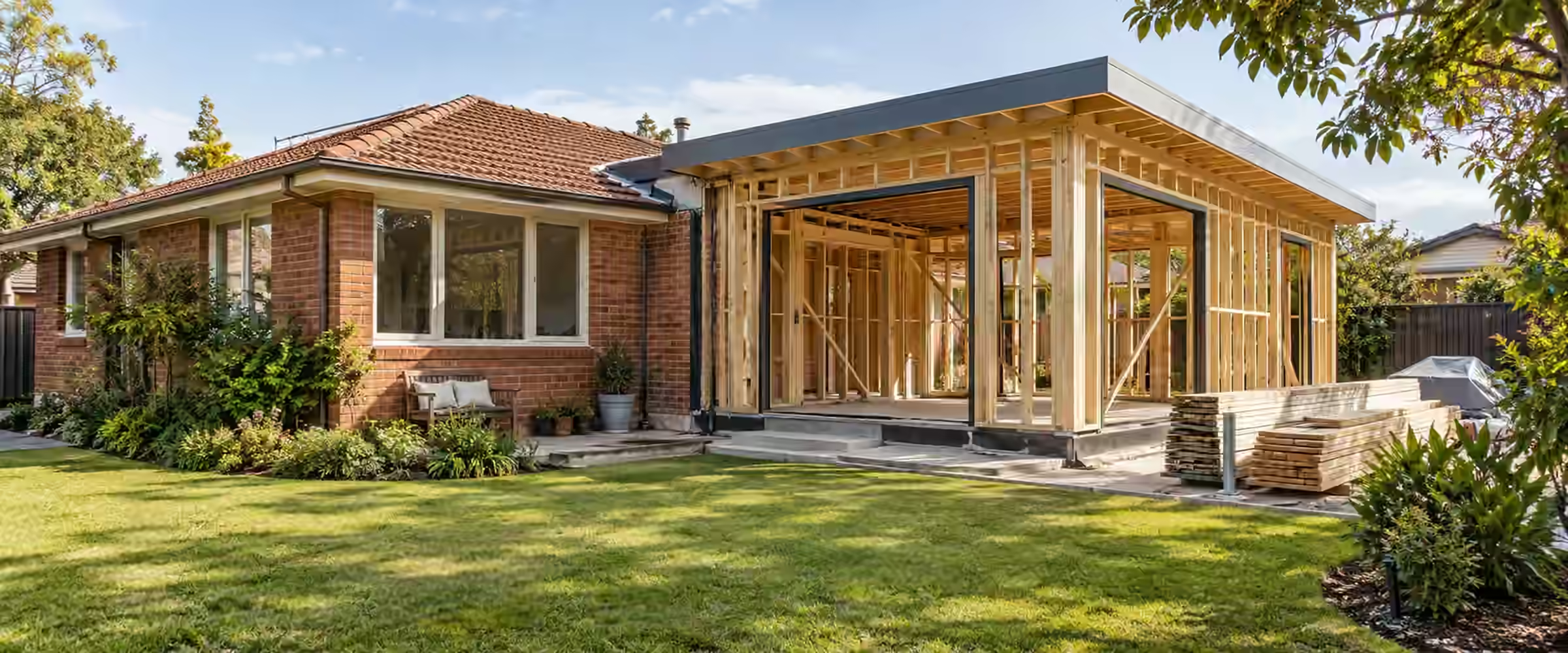
Common examples are decks, carports, garage conversions and enclosed patios, plus homes that missed an inspection.
 Alterations and additionsView alterations and additions
 Decks, pergolas and patiosView decks and pergolas
A BIC does not cover pool barriers, which fall under the separate pool safety laws.
Common issues
When owners need one
The three most common reasons we are asked to help.
Selling
Unapproved structures
Buyers and their solicitors often want a BIC in place before settlement.
Completing
No OC possible
Where a missed inspection blocks an OC, a BIC may be the way forward.
Inheriting
A previous owner's work
Work done without approval by an earlier owner still needs resolving.
The rules
What a building information certificate does
A building information certificate (BIC) is issued by council under NSW planning law. Knowing what it does, and what it does not do, helps owners and buyers set the right expectations before applying.
Sources: Service NSW: Building information certificate application; EP&A Act 1979 s 6.25 (AustLII); Wollongong City Council: Building information certificate; Hawkesbury City Council: Building information certificates. General information only; requirements depend on your lot, design and approval.
Who can apply, and how?
Applications go through the NSW Planning Portal to the local council where the land sits. A certificate may cover a whole building or only part of it, so one structure on the lot can be the subject of an application.
The owner may apply, or another person who has the owner's consent. Someone buying under a signed contract of sale can also apply, as can their solicitor or agent. A public authority may apply too, once it has given the owner notice of its intention.
For homes, councils usually want an original or certified survey report and plan showing the buildings as they are now. Council may ask for more plans, specifications or certificates, and its officers inspect the property before deciding.
What does it protect against?
Council can only issue a certificate if a careful inspection finds nothing that would let it order work or take legal action, or if it chooses not to act on what it finds.
After it is issued, council cannot direct that the building be repaired, demolished, altered, extended or rebuilt because of matters that existed before the issue date. Council also cannot bring civil proceedings about those matters for an encroachment on council land.
The 7 years people often mention is a different protection. For the first 7 years after issue, council cannot order work just because of ordinary wear and tear. The certificate does not prevent a fire safety order or an order to fix an unsafe building product.
What it does not do
A BIC is not retrospective approval. Applying does not protect you from a fine or legal action over unapproved work. Any use that requires development consent still requires it.
Council may order work to be done before it issues a certificate, or it may refuse the application. Councils say you can appeal to the Land and Environment Court in those cases.
Selling a home with unapproved work
A buyer can apply for a BIC during a sale. If you suspect unapproved work, consider dealing with it before you list, so it does not come up late in the sale. Some councils charge extra fees for structures built without approval, especially recent ones. Check your council's fees early.
Check the records before you apply
Before paying for an application, find out whether the work really is unapproved. Councils keep records of earlier approvals, and an old consent may already cover a deck or extension that a buyer has queried.
A building information certificate (BIC) deals with structures only. It does not give consent for a use, so a building being used in a way that needs consent may also need a DA for that use. Some properties need more than one pathway at the same time.
If an earlier approval turns up, compare it with what was actually built. Where the work strays from an approved DA, modifying that consent may be possible, as long as the development is not significantly changed. Parts that were never approved may still need a BIC alongside it.
Evidence councils may ask for
A survey by a registered surveyor is usually required. One council, for example, asks for it on residential land and wherever the work is within 900 millimetres of a boundary. Plans are normally drawn at 1:100 or 1:200 and show the building in its current form, with the work in question highlighted.
Councils often ask for certificates covering work that is now hidden behind linings or under floors. Depending on the job, these can include a structural engineer's certificate, termite protection to AS 3660, glazing to AS 1288 and AS 2047, smoke alarms to AS 3786, wet area waterproofing to AS 3740, and electrical and plumbing sign-off.
Council may also require work before it will issue the certificate, such as installing smoke alarms or repairing defective gutters and downpipes.
Fees for recent unapproved work
BIC fees are set by regulation. For Class 1 and Class 10 buildings, the base fee is charged per dwelling. Councils may also charge for extra inspections, for example after repair work is done.
If the application includes unauthorised building work carried out in the previous 24 months, an additional fee may apply. It is worked out from what the work is worth, using the DA and construction certificate or CDC fees that would have been payable had approval been sought. Skipping approval for recent work does not avoid those fees.
Getting the application right first time
Owner consent is essential. Some councils will not accept an application unless every registered owner has signed. Some councils also notify neighbours about the application, with one council allowing at least 14 days for this.
Once lodged, a BIC application generally cannot be amended. One council's application package points to a Land and Environment Court decision, Scarf v Shoalhaven City Council, on this point, so a substantial change may need a fresh application. Make sure the survey, plans and description cover every structure you want included before you lodge.
When a missed inspection blocks the OC
A BIC is not an approval, which means it cannot by itself support the issue of an occupation certificate (OC). A certifier also cannot direct you to obtain one, because applying is up to the owner and the decision rests with council.
Building Commission NSW gives an example of the two working together. A slab was poured without the certifier's inspection, so the owner obtained a BIC for the slab, work then resumed, and the OC excluded the slab. Another option in that case was to modify the construction certificate so the slab sat outside its scope.
More sources: Tamworth Regional Council: Building information certificates fact sheet; Blue Mountains City Council: Building information certificate application; City of Ryde: Building information certificate application package; Randwick City Council: Building information certificates; Building Commission NSW: FAQs for building certifiers; NSW Planning Portal: Post-consent certificates. General information only; requirements depend on your lot, design and approval.
Your questions, answered
BICs, explained.
What owners and buyers ask us most often.
Ask us about your projectCan a private certifier issue a BIC?
No, a building information certificate can only come from the local council, so the application always goes there. A registered certifier plays a supporting role: inspecting the existing work and preparing a compliance report that council can take into account. Council still carries out its own inspection and makes the decision. Applications can come from the owner, from anyone the owner authorises, or from a purchaser who has signed a contract for the property. A public authority can also apply once it has notified the owner.
Is a BIC just another name for an OC?
No, the two certificates do different jobs. An occupation certificate is issued by the principal certifier once approved work is finished, and it permits the new building, or the finished part, to be lived in or put to use. Council issues a BIC about a building that already exists, often one with unapproved parts, and it limits the orders council can make about matters existing at the issue date. Because a BIC is not an approval, it is no substitute for an OC.
Can a BIC cover just one structure?
Yes, a BIC can relate to a whole building or only part of one, so an application can be limited to a single deck, carport or extension. The survey and plans must clearly identify which structures are included, because the protection reaches only the structures named in the certificate. Choose the scope carefully, since a lodged application generally cannot be amended. If several structures are in doubt, including them all at the start avoids finding a gap late in a sale.
Will council require changes?
Council may require work before it issues a certificate, or it may refuse the application. Typical requirements include installing smoke alarms, repairing defective gutters and downpipes, and fixing obvious defects or safety issues. Where unapproved work cannot be shown to be adequate, council can issue an order, which may include demolishing the unapproved part. If council refuses or serves an order, there are rights of appeal to the Land and Environment Court. A thorough compliance report before lodging helps reveal likely requirements early.
Does a BIC cover a pool fence?
No, a BIC gives no assurance that the barrier around a pool or spa complies with the state's pool safety law, and council remains free to issue swimming pool safety notices or orders. Barrier compliance is shown by a separate certificate of compliance, which council or an accredited certifier can issue on request. When selling a property that has a pool, treat the BIC and the pool barrier certificate as two separate tasks, each with its own inspection and paperwork.
Related help
Related services.
Building information certificates are issued by council. Our report supports, but does not bind, council's assessment.
Guides
Building information certificate guides
Building information certificates: what they do
Found unapproved building work? Your options
Building information certificates when buying or selling
Where we work
Building information certificate help across NSW
We work in 39 council areas, from Newcastle and the Central Coast through Greater Sydney and the Blue Mountains to Lithgow, the Southern Highlands and the Illawarra. Local rules shape every approval, so start with your council or suburb.
Council areas
- Bayside Council
- Camden Council
- City of Parramatta
- Cumberland City Council
- Liverpool City Council
- Penrith City Council
- Wollondilly Shire Council
- Wollongong City Council
Local planning notes by suburb
See all 39 council areasResolve it properly
Get the report council needs.
Describe the building and what work has been done. You will receive a written quote for the inspection and report.