Pools and spas · Class 10b
Certifying your pool or spa
A new pool is really two jobs: the structure itself and the barrier that surrounds it. We settle the approval route, then inspect both before anyone swims.
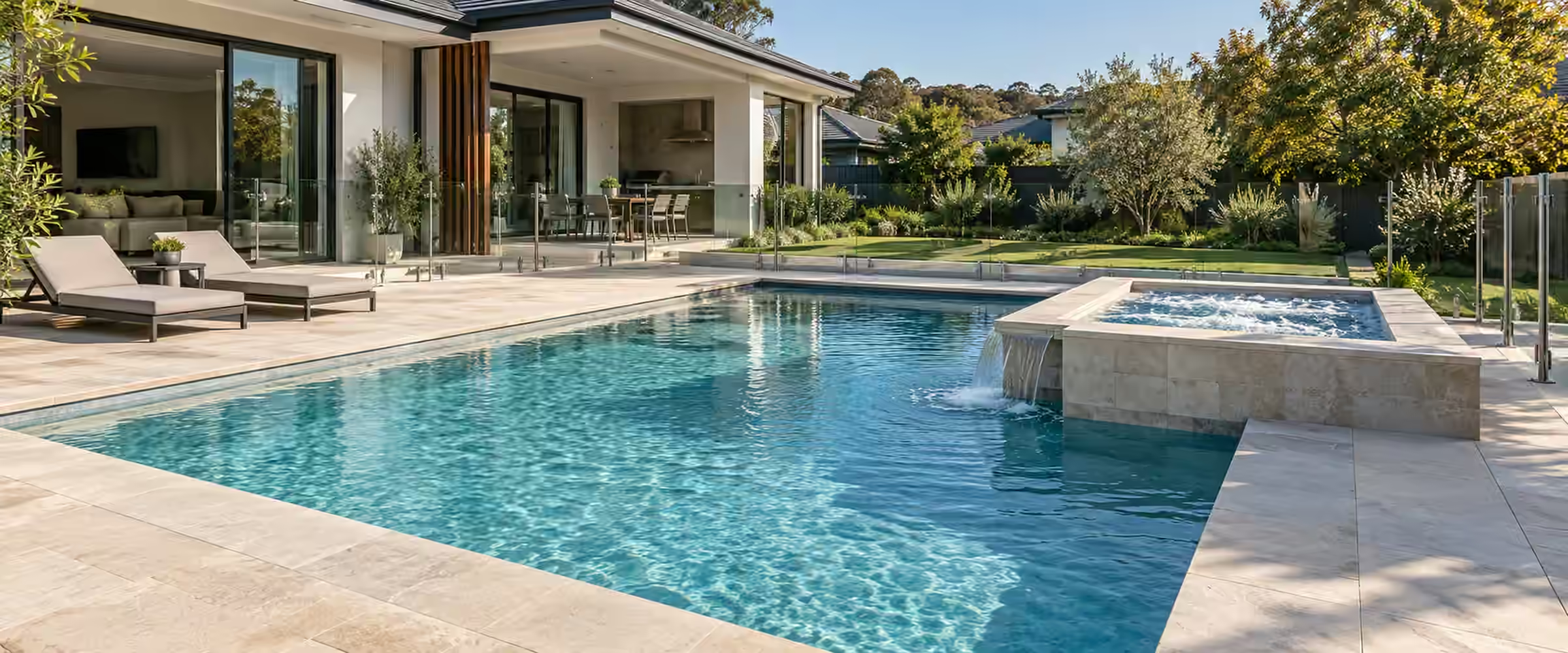
At a glance
Approving a pool or spa
A permanent swimming pool or spa is a Class 10b structure. When the site and design both qualify, it can be approved with a complying development certificate. If not, it needs a development application and then a construction certificate. Small portable pools are handled differently.
All pools must also have a child-resistant barrier, a duty imposed by NSW's Swimming Pools Act 1992. Listing a pool on the state's register is a separate step from certification and is not proof that the barrier complies.
Send us your pool plansClass 10b structure
Pools and spas share one building class, whether built in-ground or above-ground.
CDC or DA
What sets the route is your site and design, not the type of pool.
Barrier required
No water goes in until a complying child-resistant barrier is installed.
OC before use
A new pool should not be used until its occupation certificate is issued.
Approval pathway
From excavation to first swim
How certification usually runs when you build a pool or spa.
01
Confirm the pathway
We review the lot, setbacks and site constraints to tell you if the CDC path is open or if you need a DA.
02
Lodge the application
Pool plans, engineering, site levels and the barrier layout are lodged for assessment.
03
Assessment
The pool and barrier are checked against the planning standards and the building code. Gaps are raised in writing.
04
Certificate issued
Once every requirement is met, the certificate and endorsed plans are issued.
05
Inspections
Steel is inspected before the shell is poured, and the permanent barrier is inspected before filling.
06
Occupation certificate
After the final inspection, the OC confirms the pool can be used. Registration is completed separately.
Prepare your application
Documents for a pool or spa
Barrier plans count just as much as the pool plans.
- Site planPool position, setbacks, existing buildings and fences.
- Pool plans and engineeringShell design, steel details and the geotechnical basis.
- Barrier layoutFence and gate locations, heights and the non-climbable zones.
- LevelsExisting and finished ground levels around the pool and barrier.
- Drainage and backwashWhere pool water and stormwater will be discharged.
Project-specific pricing
Quoted for your pool.
Fees depend on the pathway, the pool type and the number of inspections. You receive a written quote first.
- Approval pathway
- Pool type and size
- Number of inspections
- Barrier arrangement
Other building types
Explore other building types.
We certify Class 1 homes and Class 10 structures across our service areas.
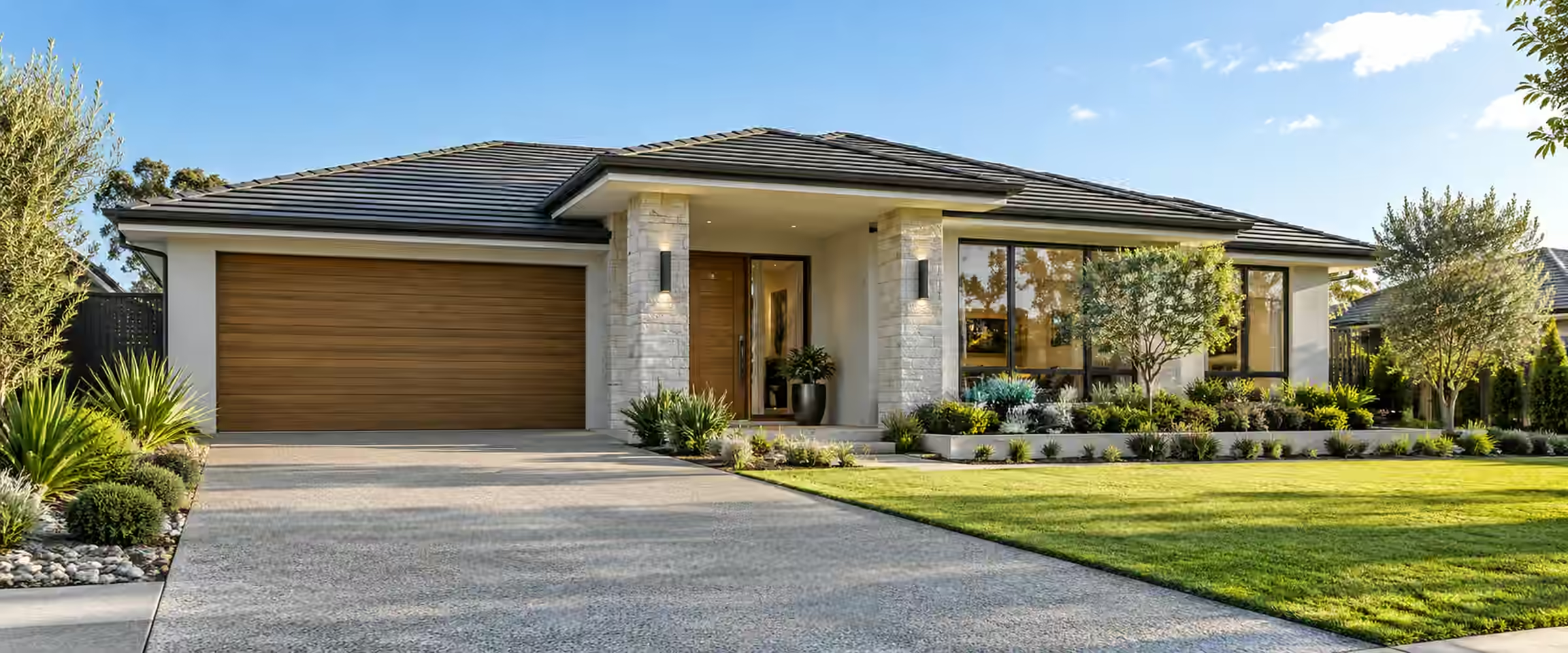
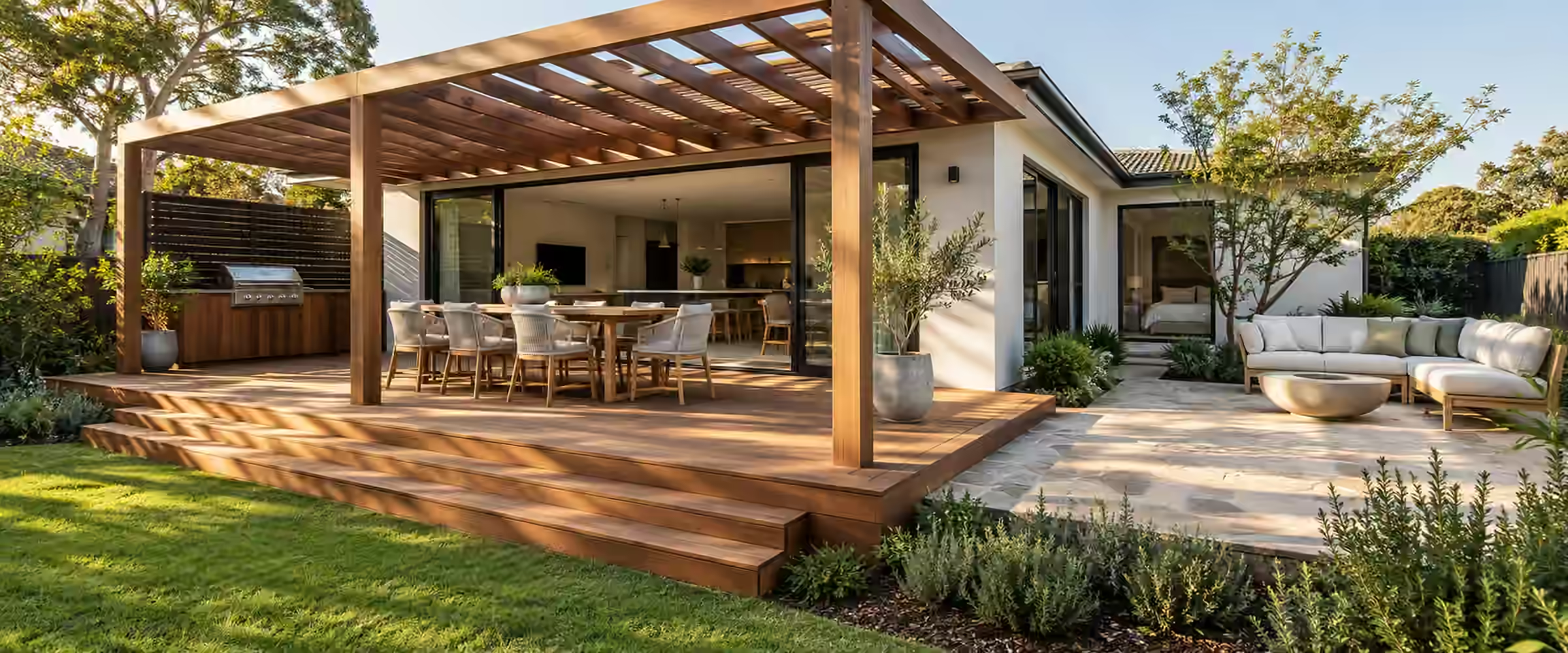
We check each project against the rules for its particular lot, and confirm the pathway before your plans are finalised.
Common issues
What trips up pool projects
Three barrier problems we see most often at inspection.
The gate
Latches that fail
A pool gate must close and latch on its own from any open position. Test it before the inspection.
The ground
Levels that change
New paving or turf can reduce the effective fence height. Measure from the finished ground.
The yard
Things to climb on
Pot plants, outdoor furniture or a retaining wall near the fence can act as footholds.
After your pool is finished
What are your pool safety duties after the build?
The occupation certificate finishes the build, but NSW pool safety law keeps applying for as long as the pool is there. These are the questions owners ask us most after handover.
Sources: NSW Government: Duties of pool and spa owners; Hornsby Shire Council: Swimming pool compliance certificates. General information only; requirements depend on your lot, design and approval.
Which fence standard covers my pool?
Your pool fence (the barrier) is assessed under whichever standard was in force at the time of construction. Pools constructed after 1 May 2013 follow AS 1926.1-2012. The 2007 version covers pools built between 1 September 2008 and 30 April 2013. Many pools built before 30 August 2008 fall under the 1986 version.
If you change or rebuild an older barrier, it loses its old standard. The 2012 standard then applies, and earlier exemptions end. Moving a gate, replacing a boundary fence or adding a wall that becomes part of the barrier are all treated as new barrier work. Check the design before you build.
Do I need a CPR sign and registration?
Every pool needs a CPR warning sign near it, including portable pools. It must be easy to read at a distance of 3 m. The current sign rules have applied to new pools since 1 September 2019. An existing pool only needs a new sign if its barrier is largely altered or rebuilt.
Portable pools are not a loophole. Any pool that can hold 30 cm or more of water must meet the barrier rules, whether or not it needed approval. You register your pool against your property address. You do not need an account, or council can do the registration for a small fee.
What if I sell or rent out my home?
When you sell, the contract needs the pool registration certificate and one more document: an occupation certificate no older than 3 years, a compliance certificate that is still valid, or a non-compliance certificate. Without one of these, the buyer can usually withdraw within 14 days after exchange, as long as the sale has not settled.
Where the sale relies on a non-compliance certificate, obtaining the certificate of compliance becomes the buyer's job. The buyer gets 90 days after settlement to fix the defects it lists, unless it records a significant public safety risk.
Rules for renting are tighter. A landlord or their agent has to supply an occupation certificate or a compliance certificate; a non-compliance certificate will not do. None of this applies to strata or community schemes over 2 lots, where the owners corporation keeps shared pools compliant.
Who inspects pool barriers?
Once a barrier inspection is passed, council or the certifier issues a compliance certificate that lasts 3 years. You can book council, or a certifier listed on the NSW pool register, to do the inspection. Every council must run an inspection program, inspect on request before a sale or lease, and investigate complaints. Pools at tourist accommodation, and pools with moveable dwellings, are inspected every 3 years.
Where a pool can sit under the Housing Code
The Housing Code route is only available for a pool built for the household's own use alongside a single house. It has to sit further back than the front wall of that home, and the water's edge needs 1 m or more of clearance to every side and rear boundary. The complete set of pool standards appears in clause 3.28 of that code.
Volume matters as well. A pool with a capacity of 40,000 L or above needs a BASIX certificate, the NSW sustainability certificate, as part of the application. Calculate the capacity from the shell size at the design stage, because a design just over that line adds a document to the package.
Where the property is served by Sydney Water, the utility must approve the building plans before any building or excavation work starts. That check is lodged through its Tap in service and is required on top of the complying development certificate (CDC) or development application (DA).
Sewer pipes near the pool
Sydney Water's technical guidelines set clearances for a pool beside a sewer. They call for 900 mm or more between the sewer and the pool's edge, measured to the coping where it is built into the pool, and 2 m or more from the wall of any sewer maintenance structure.
The bottom of the pool, or the piles under it, must sit at least 300 mm below the zone that a future dig to reach the sewer would disturb. That zone is drawn at a slope that changes with sandy or clay soils, so an engineer should confirm it for your site.
A pool can sometimes be built over a sewer, but never over a property connection point, junction or fitting. The pipe may need to be relaid and encased in concrete, and the standard design does not cover pipes more than 50 years old. Locate the pipes on a Sydney Water diagram before the pool position is fixed.
Old barrier exemptions do not apply to new pools
The central duty the Swimming Pools Act places on a pool owner is to keep a child-resistant barrier around the pool at all times. Some older pools were allowed a barrier that did not cut the house off from the pool, as long as access from the house was restricted.
Those concessions are tied to the start date of the pool. The one for lots under 230 m² covers only pools begun before 1 August 1990. The ones for lots of 2 hectares or more, and for lots with frontage to a large body of water, cover only pools begun before 1 July 2010.
A pool built today cannot rely on any of them, even on a big rural property or a block with water frontage. Design a barrier that fully divides the house from the pool, and look closely at any house doors or windows that would open into the pool area.
While the pool is under construction
As soon as building work on a pool begins, the occupier must erect a warning sign near it saying the pool must not be occupied or used, and keep it there until either an occupation certificate (OC) or a compliance certificate has been issued. Spa pools are left out of this sign rule.
The NSW Swimming Pools Register refers to AS 4687.4, the Australian Standard for temporary pool fencing, for barriers used during construction, repair and renovation. Plan for temporary fencing from the first day of excavation, because rain can put water in an open shell long before the permanent barrier is installed.
After handover, the occupier must keep the barrier in good repair as an effective child-resistant barrier, and keep every gate and door into the pool area securely closed when not in use. Each of these duties carries a maximum penalty of 50 penalty units under the Act.
Spas, hot tubs and lockable covers
Under the Act, a spa pool includes a spa, flotation tank, tub or anything of that nature. A spa bath, or anything inside a bathroom, is not counted as a swimming pool at all.
A spa pool does not need a fence if access to the water is restricted whenever it is not in use, to the standard set by regulation (Swimming Pools Regulation 2018). That standard calls for a lockable child-resistant structure, such as a door, lid, grille or mesh, of substantial construction and held by a fastening device that is itself substantial.
A cover that cannot be locked, or that is flimsy, will not meet the standard. The concession also lasts only while the cover is closed and locked, so a spa left open after use is unprotected.
More sources: NSW Planning Portal: Complying development, swimming pools; NSW Planning Portal: About BASIX; Sydney Water: Building over and adjacent to pipe assets, technical guidelines; NSW Legislation: Swimming Pools Act 1992; NSW Legislation: Swimming Pools Regulation 2018; NSW Swimming Pools Register: Information for pool owners. General information only; requirements depend on your lot, design and approval.
Your questions, answered
Pools and spas, explained.
Questions owners ask before putting in a pool.
Ask us about your projectDoes every new pool need approval?
Almost every permanent pool needs approval, either a complying development certificate (CDC) or a development application (DA) and then a construction certificate. A CDC is possible when the pool serves a single house, is located behind its front building line and keeps the water's edge 1 m clear of side and rear boundaries. The remaining Housing Code standards must also be met. A BASIX certificate is added once capacity reaches 40,000 L. Whichever route applies, any pool that can be filled deeper than 300 mm, portable ones included, must be enclosed by a barrier that complies.
When can I fill the pool?
Water should only go in once a child-resistant barrier fully encloses the pool, because the Act requires one at all times. During the build, temporary pool fencing does that job, and a warning sign has to remain in place until an OC or compliance certificate is issued. In practice, the permanent fence and gates are completed, the last inspection passes and the OC is issued before the first swim. Ask for the barrier inspection the moment the fencing, gates and nearby ground levels are complete, so the final sign-off is not held up.
Is registration the same as certification?
No, registering a pool and certifying its barrier are two separate obligations. Registration is the owner's duty to enter the pool's details on the NSW Swimming Pools Register, and a pool counts as registered once those details are entered. It records that the pool exists, not that it is safe. Certification involves an inspection by council or a registered certifier, after which council or the certifier issues a compliance certificate, or an OC for a new pool. A certificate of compliance can only be issued for a pool that is registered and meets the barrier rules, and it stays valid for 3 years unless council issues a direction about the pool.
Can a spa have a cover in place of a fence?
Yes, an outdoor spa can go without a barrier if a lockable cover restricts access to the water every time it is not being used. The cover must meet the pool regulation, which means a strong child-resistant structure with no opening large enough for the standard test probe to pass, secured by a sturdy fastening. The concession only works while the cover is shut and locked, so it suits owners who will lock it after every soak. We confirm whether your spa and its cover qualify before the approval relies on it.
What happens if the barrier fails inspection?
If a barrier fails a compliance inspection, the certifier has to tell the owner in writing why no certificate can issue, and those defects are fixed before a second inspection. Typical problems are gates that do not swing shut and lock by themselves, objects near the fence a child could climb, and new paving or turf that lowers the effective fence height. On a new build, the OC waits until the barrier passes, and nobody may use the pool until then. Leave the temporary fence up while repairs are done.
Services for your pool
Related services.
Guidance: Codes SEPP, Swimming Pools Act 1992, National Construction Code. Exact requirements turn on your lot and design.
Guides
Pool and spa guides
Pool barrier rules in NSW: fences, gates and climbable zones
Does your pool or spa need approval? Exempt, CDC or DA
Pool registration and compliance certificates explained
Where we work
Pool and spa certification across NSW
We work in 39 council areas, from Newcastle and the Central Coast through Greater Sydney and the Blue Mountains to Lithgow, the Southern Highlands and the Illawarra. Local rules shape every approval, so start with your council or suburb.
Council areas
- Camden Council
- Canterbury-Bankstown Council
- City of Newcastle
- City of Parramatta
- Fairfield City Council
- Lane Cove Council
- Sutherland Shire Council
- Woollahra Municipal Council
Local planning notes by suburb
See all 39 council areasPlanning a pool?
Get the barrier right from day one.
Share your address and pool plans with us. We'll explain the pathway and what the barrier needs, then give a written quote.