Who we work with
Certification for everyone on the job
Owners, builders, designers and specialist contractors each need something different from a certifier. Here is how we work with each of you.
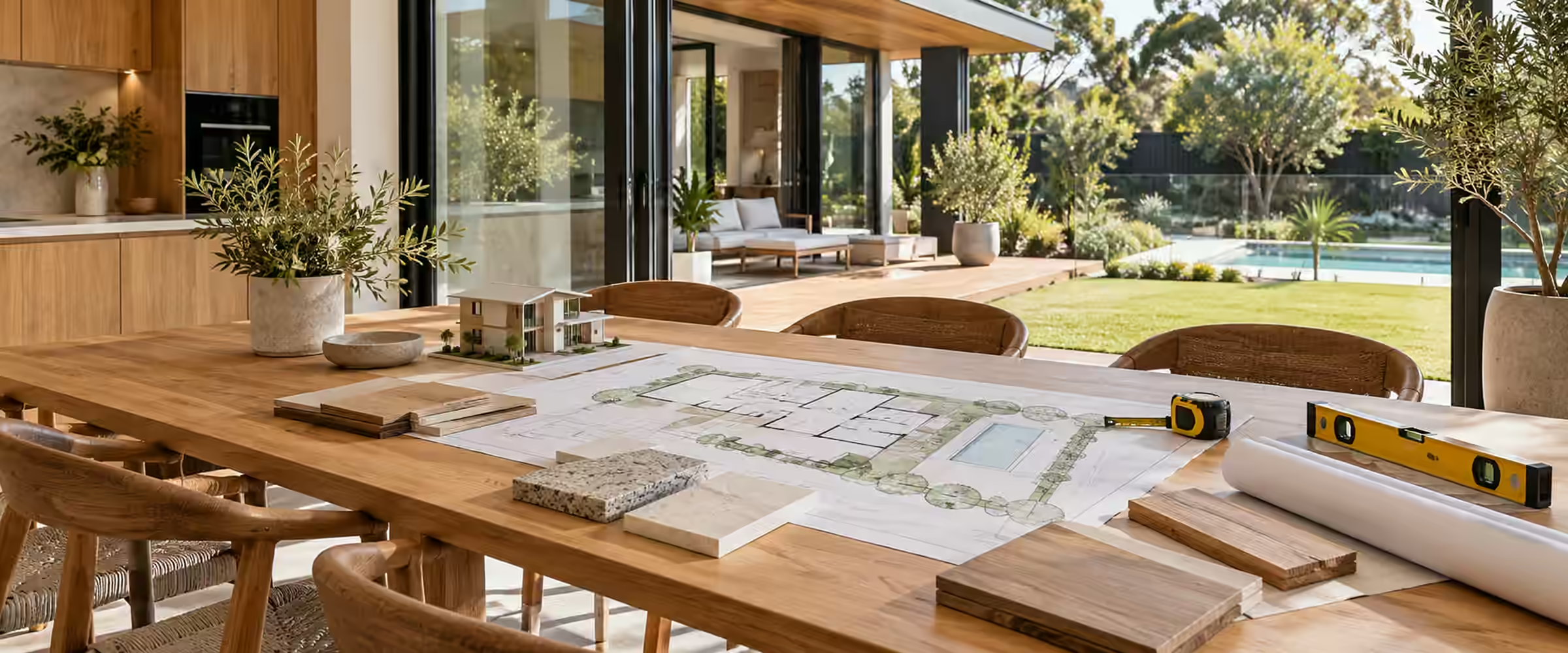
One project, several parties
Clear roles from the first plan to handover
A certifier is independent of the owner, the designer and the builder. Our job is to check the work, not to design or build it, and to keep every party clear on what is needed and when.
Pick your role below to see what to provide and how we keep the project progressing.
Talk to us about a projectOwner
Appoints the certifier and holds the approval.
Designer
Prepares plans that meet the standards.
Builder
Builds to match the approved plans and books each inspection.
Certifier
Assesses the plans, inspects the building work and issues certificates.
Choose your role
Working together.
Each page covers what to provide, what happens and the most common problems we find.
Homeowners
You hold the approval and appoint the certifier. We explain each step plainly and tell you what comes next.
Builders
Inspections booked around your program, results recorded in writing and completion documents tracked as you go.
Architects and designers
An early read of your design against the codes, and one written list of questions to answer.
Pool and outdoor contractors
Approvals and inspections for pools, barriers, decks, pergolas, sheds and retaining walls.
What every party gets
The same standard of service for all
Whoever you are on the project, you can expect three things.
In writing
One list of questions
We send all requests for information at once, so one round of answers covers them.
On record
Every inspection documented
Each result is written up, with anything to fix before the next stage.
On track
Completion documents tracked
We follow up certificates during the build so the occupation certificate is not held up.
Roles on a build
Who does what on a home build?
NSW law gives each person on a home build their own job. Knowing who is responsible for what, and who to call when things go wrong, saves everyone time.
Sources: NSW Government: Guide to providing home building contracts; NSW Government: licences for general building work; NSW Government: when owner-builders need a permit; Building Commission NSW: How we deal with building defect complaints. General information only; requirements depend on your lot, design and approval.
Five parties, five jobs
The owner holds the approval, signs the contract with the certifier and appoints the principal certifier. The builder does the work as approved and as the building contract says. The designer and engineers are responsible for the documents they prepare.
A certifier acts as an independent regulator in the public interest. Managing trades and enforcing your building contract sit outside the role. When a certifier finds non-compliant work and a direction to fix it is not followed, council must be notified. Council determines development applications, issues building information certificates and can take enforcement action.
Licences and contracts
Builders must be licensed for work valued above $5,000 including labour, materials and GST. Any job priced over $5,000 also needs a written contract.
Work from $5,000 to $20,000 needs a small works contract. Work over $20,000 needs a full home building contract, with a cooling-off period of 5 clear business days. The deposit cannot be more than 10% of the price.
Insurance and owner-builders
Where a contract exceeds $20,000, home building compensation insurance must be taken out by the builder and the certificate given to you. The principal certifier has to be satisfied the builder holds the correct licence and insurance before work begins.
Without a licensed builder, carrying out or supervising work valued above $10,000 on a home you own calls for an owner-builder permit. Above $20,000, approved training is also required. You must hold your approval before applying. Permits for dual occupancies (a pair of homes on a single lot) are granted only in special circumstances.
What if something goes wrong?
For contracts signed from 1 February 2012, builder warranties last 6 years for major defects and 2 years for other defects. If a problem appears in the last 6 months, you get a further 6 months to act.
Start by putting the problem to your builder in writing. If nothing is done, Building Commission NSW runs a free complaint service via Service NSW. Where defects are major or work is incomplete, an inspector may attend and direct the builder to rectify it. Disputes that remain unresolved can be taken to the NSW Civil and Administrative Tribunal (NCAT). Notify your home building insurer in writing as soon as defects come to light.
Lodging a complaint does not stop the warranty period running. If it is close to expiring, apply to NCAT as well so your rights are protected. Where less than 3 months remain, the claim goes directly to NCAT. Complaints about certifiers are also handled by Building Commission NSW.
Your questions, answered
Working together.
How responsibilities are shared on a typical project.
Ask us about your projectWho answers a request for information?
The person who prepared the item being queried. Questions about the drawings go to the architect or designer, engineering queries go to the engineer, and site or construction matters go to the builder. The owner, who holds the application, makes sure each answer comes back. A request for information is sent as one written list so every party can respond in a single round rather than piecemeal. Answering every item together, with revised plans where needed, keeps the assessment moving and avoids a second request.
Can owner-builders use your services?
Yes. Owner-builders get the same Class 1 and Class 10 certification service as licensed builders. NSW asks owner-builders to hold a permit once the work on their own home is valued above $10,000, and to complete approved training once it passes $20,000. You can only apply for the permit once you hold your approval. The principal certifier must have the permit details before work starts. Permits for a dual occupancy are granted only in special circumstances, so check this early if two homes are planned.
Working on a project?
Tell us your role and what you plan to build.
Email the address and plans. We will outline the pathway and send a written certification quote.