For builders
Certification for builders
Inspections that fit your program, written results after every stage and the handover documents tracked during the job, not chased at the end.
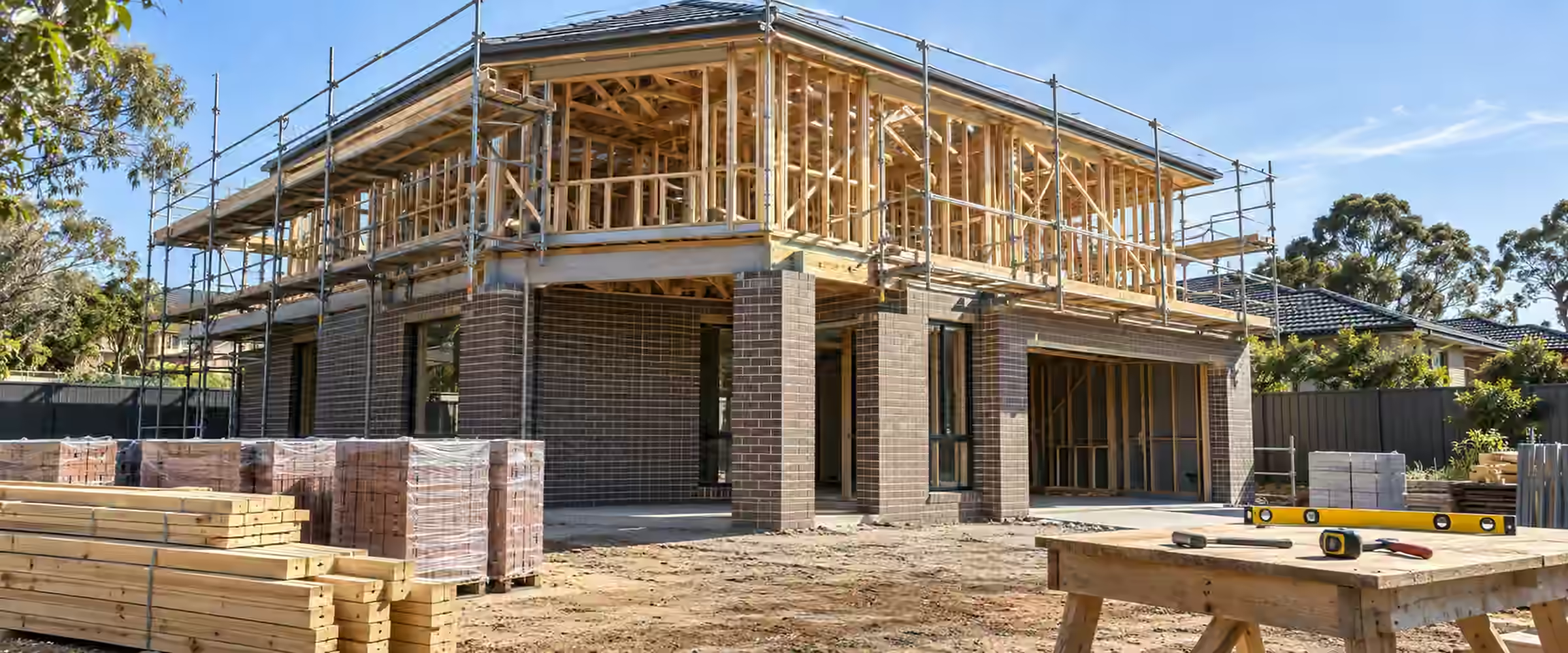
On site
Certification that keeps the job moving
We certify Class 1 homes and Class 10 structures for builders across NSW. The owner appoints us, and we work with you directly through the build.
Inspections are confirmed ahead of time, each result is written up with anything to fix, and we follow up the paperwork the occupation certificate depends on as each trade finishes.
Send us a jobBooked to your program
Inspections confirmed before the day.
Results in writing
What passed, and what needs attention next.
Handover ready
Trade certificates collected during the build.
Owner appoints
Feel free to suggest us to your clients.
Start-up paperwork
What to have ready
With these on hand, nothing delays the notice of commencement.
- Licence detailsYour contractor licence for the work.
- Insurance certificateHome building compensation cover where the contract requires it.
- ProgramThe planned start date and the stages coming up.
- Trade certificatesSign-off for waterproofing, glazing, termite protection, smoke alarms and engineering as each is done.
Working with us
Clear on every stage.
You always know which inspection is next and what remains open.
- Inspections confirmed in advance
- Written result after each stage
- Document list kept up to date
- One point of contact
Through the job
From day one to handover.
Where certification fits into your program.
01
Before work
The owner appoints us, the start-up paperwork goes in, and notice is given no less than 2 days before work starts.
02
During work
Every critical stage, from footings and frame to wet areas and stormwater, is inspected while still exposed.
03
Handover
The final inspection and completion documents go in, and the occupation certificate is issued.
Common projects
What builders build with us.
Two common project types. See the full list on our building types page.


Common issues
Where builds get held up
Three issues behind most delays as a job wraps up.
Inspections
Work covered too early
A stage covered before inspection is hard to recover and can stall the occupation certificate.
Changes
Site changes not approved
A change to the design may need the approval modified before it is built.
Paperwork
Certificates chased at the end
Collecting trade certificates as you go avoids waiting at handover.
For builders
Licences, site signs and Building Commission inspections
The owner holds the approval and appoints the certifier. But several legal duties on a house job sit with you as the builder. Below are the duties that cross over with certification most often.
Sources: NSW Government: Licence for general building work; Building Commission NSW: How we audit Class 1 building constructions; NSW Planning Portal: Notice of determination citing EP&A Regulation 2021 section 70; MinterEllison: NSW Parliament passes new approvals and practitioners law. General information only; requirements depend on your lot, design and approval.
Licences and supervision
A contractor licence is required to carry out, advertise or contract for home building work over $5,000 (labour plus materials, GST included). Subcontract work forming part of a bigger job above that value is covered too. Companies and partnerships hold their own licence. Whoever supervises the work needs an endorsed contractor licence or a qualified supervisor certificate.
Licences are issued for 1, 3 or 5 years, so check renewal dates fall after the job ends. Specialist work outside your licence categories must go to a subcontractor licensed for it and be supervised by someone qualified in it. Unlicensed work can be fined up to $22,000 for a person and $110,000 for a company.
What must the site sign show?
Jobs under a development consent must have a sign in a prominent spot on site. It must show the principal certifier's contact details, the principal contractor's name and an after-hours phone number. It must also state that unauthorised entry is prohibited. Keep it up while work is under way and take it down when finished. Building Commission inspectors check these signs.
Building Commission NSW site visits
Building Commission NSW can inspect house sites at any stage, with or without a complaint. It can also demand designs, approvals, certificates and test reports by written notice. Sites are picked by risk and at random. Visits line up with key stages: before a concrete pour, before framing or wet area waterproofing is covered, before stormwater is covered, and after completion but before the occupation certificate.
Inspectors can issue orders to fix defective work, and stop work orders. Orders can also be issued where work could block a valid occupation certificate, or where the principal certifier changes. A company that ignores an order faces up to $330,000, plus $33,000 a day. You can appeal to NCAT (the NSW tribunal) within 30 days, but the order still applies unless NCAT says otherwise. Orders go on a public register.
Keep your records ready
Keep trade certificates, test reports and product details in one place from day one. Your certifier needs them for the occupation certificate, and the Commission can ask for them. A file ready for an audit is usually ready for handover.
Further reform is on the way. NSW's new Building (Approvals and Practitioners) Act 2026 has been passed by Parliament. Under it, construction certificates become "building approvals" and occupation certificates become "completion approvals". Most of it commences later, on a date not yet fixed. The current process applies until then.
Your details go to council before work
When a private certifier is the principal certifier on residential building work, it has to send the council written notice of who is building before work goes ahead. That notice names the principal contractor, gives their licence number and names the home building compensation insurer. On an owner-builder job, it gives the owner-builder's name and, where one is needed, the permit number.
If any of those details become wrong, for example a new builder takes over or the insurer changes, work has to stop until the principal certifier sends the council an updated notice. Let the certifier know about a change on the day it happens.
Where the job must carry home building compensation insurance, the policy has to be in force before work starts. NSW consumer guidance also says the builder must hand the owner evidence of that cover before starting, and before taking any money, deposit included.
Calling up each inspection
For Class 1 and Class 10 buildings, the regulation sets out the critical stages. They fall after digging and ahead of the footings, ahead of any reinforced concrete cast on site, before framework is covered, before wet area waterproofing is covered, before stormwater connections are covered, and when the job is finished. The principal certifier lodges a notice on the NSW Planning Portal listing the inspections your job needs.
The principal contractor, or an owner-builder, has to give the principal certifier at least 48 hours' notice before each critical stage or other required inspection. Another certifier can carry out an inspection if the principal certifier agrees, but the final one must be done by the principal certifier.
Build those 48 hours into the program for every pour and every lining crew. A concreter booked for the morning after a call-up leaves no slack if something needs fixing first.
What if an inspection gets missed?
If anyone other than the principal certifier realises an inspection was missed, they must tell the principal certifier within 2 days. The certifier then has 2 days to tell whoever appointed them, the principal contractor and any owner-builder.
The certifier can log the missed stage as not required only where the miss was unavoidable and the certifier is satisfied the work itself is acceptable. That relief never covers the final inspection. An occupation certificate cannot be issued until the certifier is satisfied every required inspection took place, so a covered stage can mean opening up finished work.
When the certifier issues a direction
A formal written direction about non-compliant work must be on the approved form and issued within 2 business days after the certifier becomes aware of the problem. It explains the defect to be put right and the period allowed for it.
Once that time has passed, the principal certifier inspects the site again, records what was found and gives a copy to the person responsible. If the direction has still not been followed, a notice saying so must be given to the owner of the land, including an owners corporation where there is one.
Reply to a direction in writing, with photos and any certificates that show the fix. A clear trail helps at the occupation certificate stage and in any later audit.
Contract terms that touch certification
For residential work over $5,000 that needs a certifier, the contract must include terms about the owner's freedom to pick their own certifier, unless the owner is a developer. That is why a builder can suggest a certifier but cannot make the choice for the client.
Statutory warranties run alongside the certificates. Builders warrant that the work is fit for purpose and carried out diligently, using suitable materials that are new unless agreed otherwise. Owners have 6 years to start proceedings for major defects and 2 years for other defects, with an extra 6 months where a defect only shows up late in either period. An occupation certificate does not end those duties.
More sources: NSW Legislation: Development Certification and Fire Safety Regulation 2021 (as made); NSW Legislation: Environmental Planning and Assessment Regulation 2021 (as made); NSW Government: Consumer Building Guide; NSW Planning Portal: MyHome Planner, the build phase; ABCB: NCC 2022 Volume Two, NSW Part H6 energy efficiency. General information only; requirements depend on your lot, design and approval.
Your questions, answered
Questions from builders.
Common questions about inspections and handover.
Ask us about your projectHow are inspections booked?
Contact the principal certifier, quoting the job address, the certificate number and the stage reached, at least 48 hours before you need the visit. The regulation puts that notice duty on the principal contractor, or on the owner-builder where there is no builder. The stages for your job are listed in the critical stage notice lodged on the NSW Planning Portal at the start. We then confirm the booked time in writing. If the work will not be ready, cancel early so the slot can move and the concrete truck is not left waiting.
Do sheds and garages need critical stage inspections?
Yes. The regulation's critical stage list applies to Class 10 buildings too, not only to homes, so each listed stage that actually happens on a shed or garage job gets inspected. A shed on a slab usually needs a visit after excavation, another before the reinforced slab is poured and one before stormwater pipes are covered, then a final inspection. A lined timber garage adds a frame inspection before the linings go on. The certifier's notice spells out the stages for that structure, so check it before the first pour.
Can we change the windows or hot water on site?
Only once the paperwork has changed. In NSW, the commitments in a BASIX certificate are made conditions of the consent or complying development certificate, so the windows, glazing, insulation and hot water system you install must match them. A swap means an updated BASIX certificate and, where the approved plans are affected, a modified approval before the item goes in. Talk to the designer and the certifier before ordering substitutes. Installed items are checked against BASIX before the occupation certificate is issued.
Can I appoint you on behalf of my client?
No. The owner engages the principal certifier, not the builder, and NSW guidance for home owners says so directly. Contracts over $5,000 that need a certifier must also include terms about the owner's freedom to choose one, unless the owner is a developer. You can still recommend us and pass our details to your client. Once the owner signs the appointment, we work with you directly on inspections, documents and site questions all the way through to handover.
Services for builders
What builders use most.
Guidance: the Environmental Planning and Assessment Act 1979 and the National Construction Code. What applies depends on the conditions in your approval.
Where we work
Certification for builders across NSW
We work in 39 council areas, from Newcastle and the Central Coast through Greater Sydney and the Blue Mountains to Lithgow, the Southern Highlands and the Illawarra. Local rules shape every approval, so start with your council or suburb.
Council areas
- Central Coast Council
- Cumberland City Council
- Georges River Council
- Lane Cove Council
- Liverpool City Council
- Shellharbour City Council
- Strathfield Council
- Woollahra Municipal Council
Local planning notes by suburb
See all 39 council areasGot a job starting?
Send it through.
Share the site address and plans. We'll confirm the pathway, then give a written certification quote for your client.